The Guru Period
1469–1708
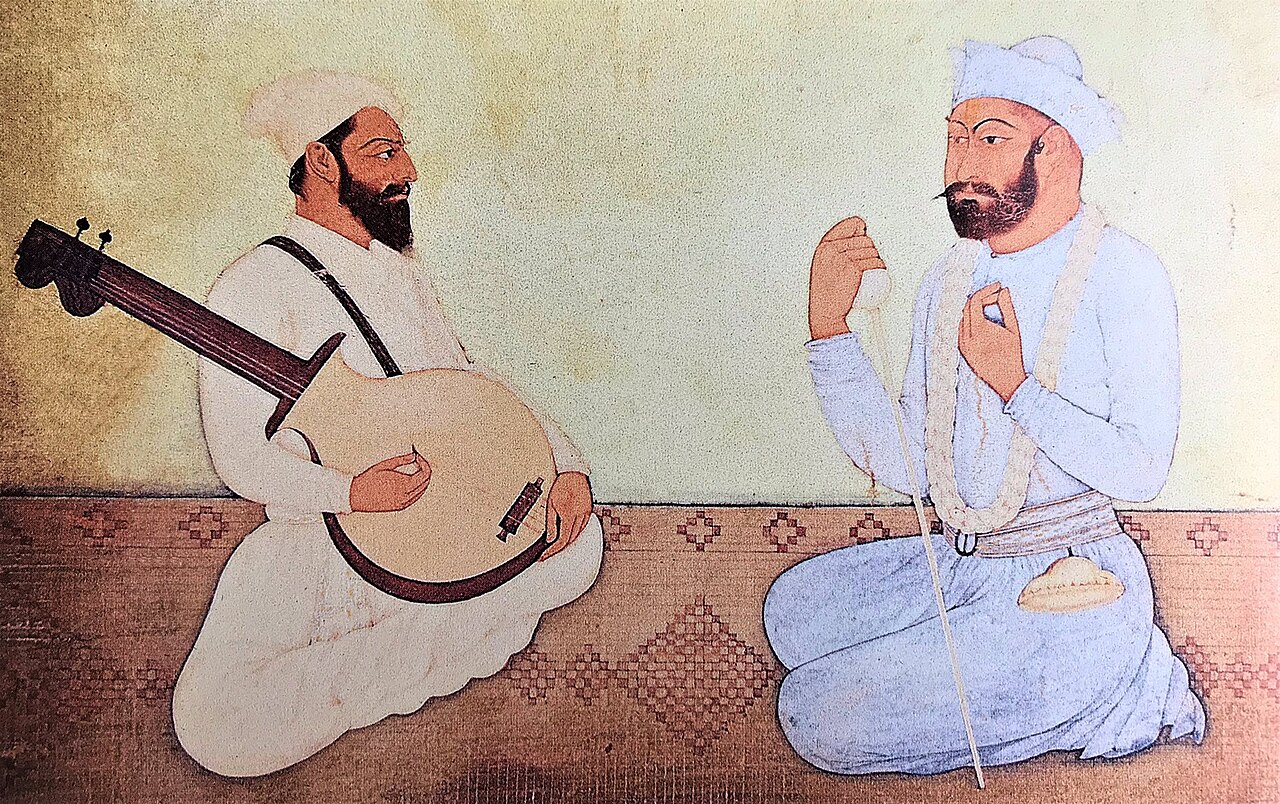
From Guru Nanak's declaration of the oneness of God in 1469 through the lives of the ten Gurus — the founding of Sikh communities, the compilation of scripture, the building of Amritsar, two Guru martyrdoms, the creation of the Khalsa in 1699, and the vesting of eternal Guruship in the Guru Granth Sahib in 1708.
The founding
Guru Nanak Dev Ji was born in 1469 at Rai Bhoi Ki Talwandi, now Nankana Sahib. His teaching was radical in its simplicity: one God, the equality of all people regardless of caste or creed, honest work, and service to others. After years of travel he settled at Kartarpur, where the first Sikh community took shape around three practices that still define Sikh life — devotion (nam), honest labour (kirat), and the shared kitchen (langar).1,2,3
Nine Gurus follow
Leadership passed through nine further Gurus. Guru Angad standardised the Gurmukhi script; Guru Amar Das strengthened the langar and challenged social inequities of his day; Guru Ram Das founded Amritsar around its sacred pool. Guru Arjan compiled the Adi Granth and installed it in the Harmandir Sahib in 1604 — and two years later became the first Sikh martyr.1,2
Sword and spirit
In response, Guru Hargobind took up temporal as well as spiritual authority — the doctrine of miri-piri — and raised the Akal Takht opposite the Harmandir Sahib. Guru Tegh Bahadur founded Anandpur and was executed in Delhi in 1675 for defending the freedom of others to practise their faith. A generation later, the four Sahibzade — the sons of Guru Gobind Singh — were killed in 1704: the elder two in battle at Chamkaur, and the younger two, still children, bricked alive at Sirhind.1,2
The Khalsa and eternal Guruship
Guru Gobind Singh created the Khalsa at Anandpur on Vaisakhi 1699, giving the community its distinctive identity and code. Before his death at Nanded in 1708 he ended the line of human Gurus, vesting eternal Guruship in the Guru Granth Sahib.1,2,4
In this chapter
- Birth of Guru Nanak Dev Ji1469
- Guru Nanak's Revelation at Sultanpur1499
- Founding of Kartarpur1522
- Founding of Amritsar1577
- Installation of the Adi Granth1604
- Founding of the Akal Takht1606
- Martyrdom of Guru Arjan Dev Ji1606
- Founding of Anandpur1665
- Martyrdom of Guru Tegh Bahadur Ji1675
- Creation of the Khalsa1699
- The Battle of Chamkaur1704
- The Evacuation of Anandpur1704
- The Execution of the Younger Sahibzade1704
- The Battle of Muktsar1705
- Guru Granth Sahib Declared Eternal Guru1708
Last updated: