Sovereignty & Banda Singh
1708–1748
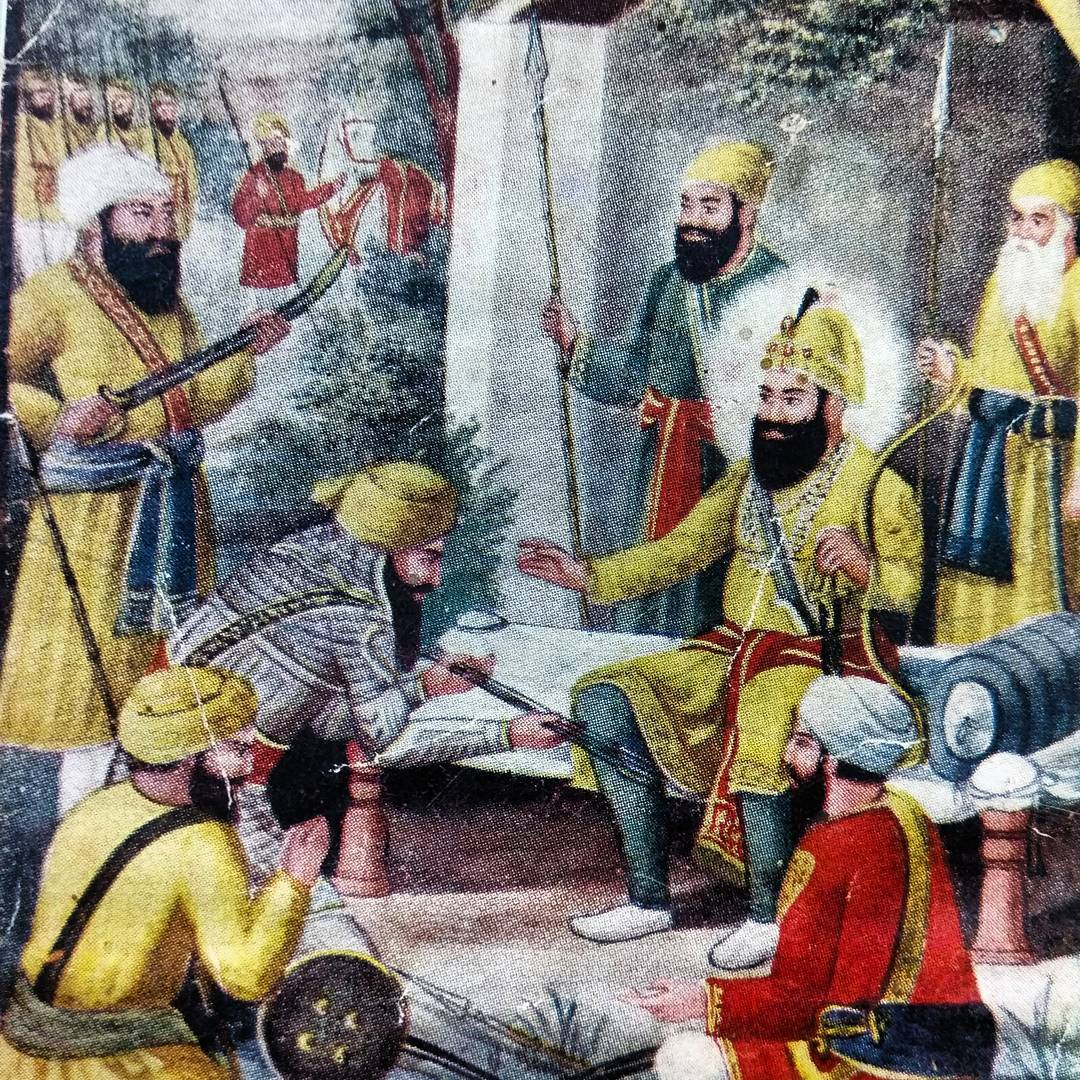
The first sovereign Sikh state. Banda Singh Bahadur carried Guru Gobind Singh's authority into the Punjab, defeated the Mughal governor at Sirhind in 1710, struck coins and issued land reforms, and was executed in 1716 — followed by decades of persecution and regrouping.
The first sovereign Sikh rule
Acting on Guru Gobind Singh’s authority, Banda Singh Bahadur carried the struggle into the Punjab. In 1710 he defeated the Mughal governor Wazir Khan at Chappar Chiri and captured Sirhind, establishing the first sovereign Sikh rule. He struck coin in the name of the Gurus and issued land reforms that favoured the cultivators over the old landholding class.1,2,3
Reprisal and endurance
Mughal reprisal was severe. Banda Singh was captured and executed in Delhi in 1716. In the decades that followed, governors of Lahore such as Zakariya Khan pursued the Sikhs with bounties and mass executions; in the Chhota Ghallughara of 1746, some seven thousand were killed in the marshes near the Beas.1,2,3
Regrouping as the Dal Khalsa
Yet the community held together. Meeting as the Sarbat Khalsa at Amritsar, the Sikhs organised their scattered fighting bands; on Vaisakhi 1748 these were brought together as the Dal Khalsa — the seed of the misl confederacy that would dominate the Punjab in the years ahead.1,2,3
In this chapter
- Battle of Chappar Chiri1710
- Execution of Banda Singh Bahadur1716
- The Bandai and Tat Khalsa Settle1721
- The Nawabi Offered to the Khalsa1733
- The Martyrdom of Bhai Mani Singh1738
- The Martyrdom of Bhai Taru Singh1745
- Chhota Ghallughara — the Lesser Massacre1746
Last updated: