The Misl Period
1748–1799
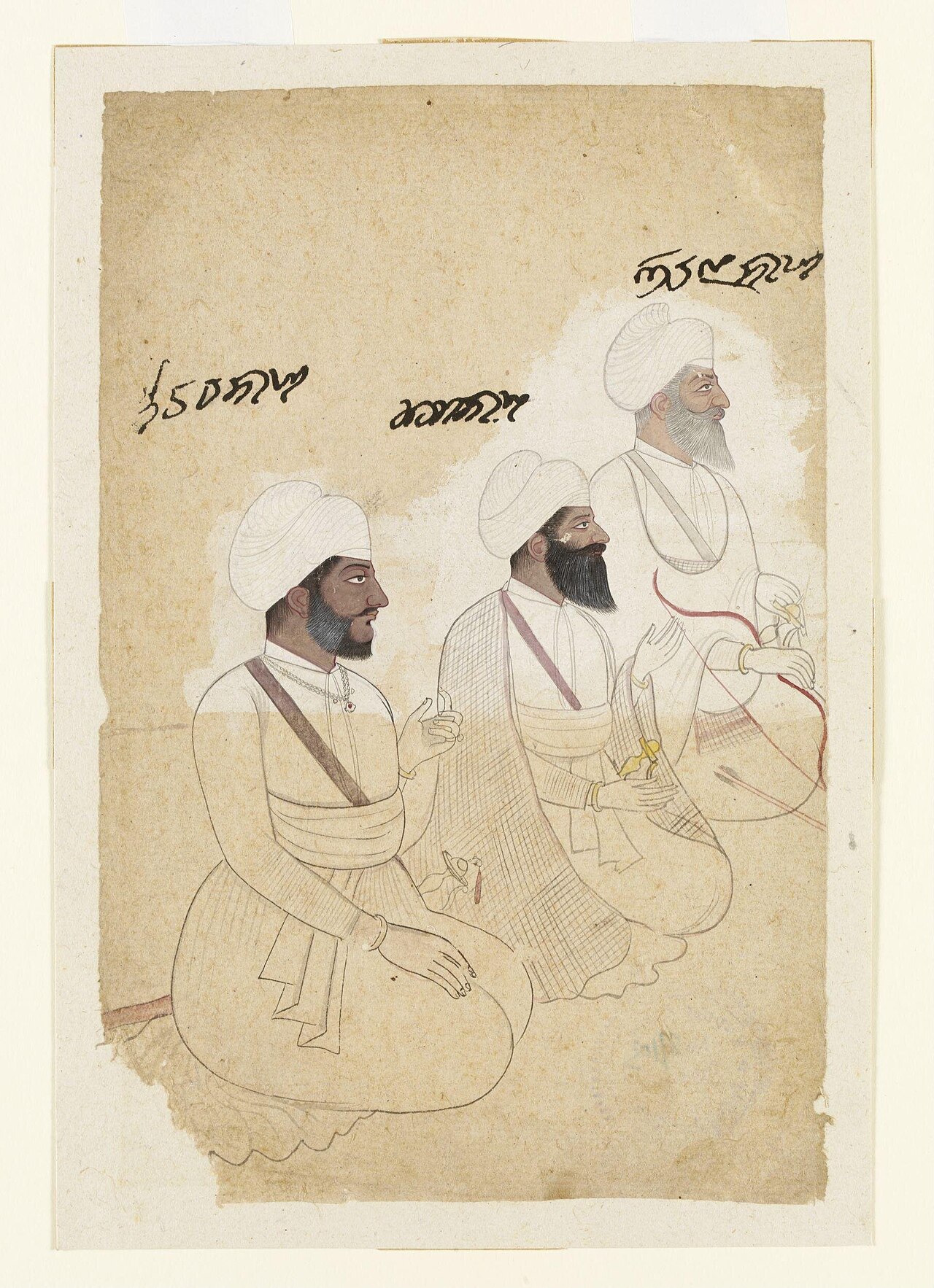
A confederacy of Sikh misls resisted Mughal and Afghan power across the Punjab, survived catastrophic massacres such as the Vadda Ghallughara of 1762, and gradually took control of the region — setting the stage for a single unifying ruler.
Power in the hands of the misls
Through the second half of the eighteenth century, power in the Punjab lay with the misls — a confederacy of Sikh war-bands, commonly counted as twelve, that governed territory, collected rakhi (protection revenue), and resisted both Mughal and Afghan authority.1,2
The Vadda Ghallughara
The cost of survival was heavy. During Ahmad Shah Durrani’s repeated invasions the Sikhs suffered the Vadda Ghallughara of 1762, when tens of thousands — many of them non-combatants — were killed in a single day near Kup and Malerkotla. The community endured, and pressed its advantage: in 1765 the misls took Lahore and struck coin in the name of the Gurus.1,2
Toward unity
By the century’s close the misls held the Punjab, but remained divided among rival sardars — an opening that a single leader would soon seize.1,2
In this chapter
- The Formation of the Dal Khalsa1748
- The Destruction of the Harmandir Sahib and Baba Deep Singh's March1757
- The Rescue at the Goindwal Ferry1761
- Vadda Ghallughara (The Great Massacre)1762
- The Sikh Capture of Sirhind1764
- Sikh Misls Capture Lahore1765
- The Bhangi Misl Takes Multan1772
- The Sikh Occupation of Delhi1783
Last updated: