The Singh Sabha Reform
1849–1947
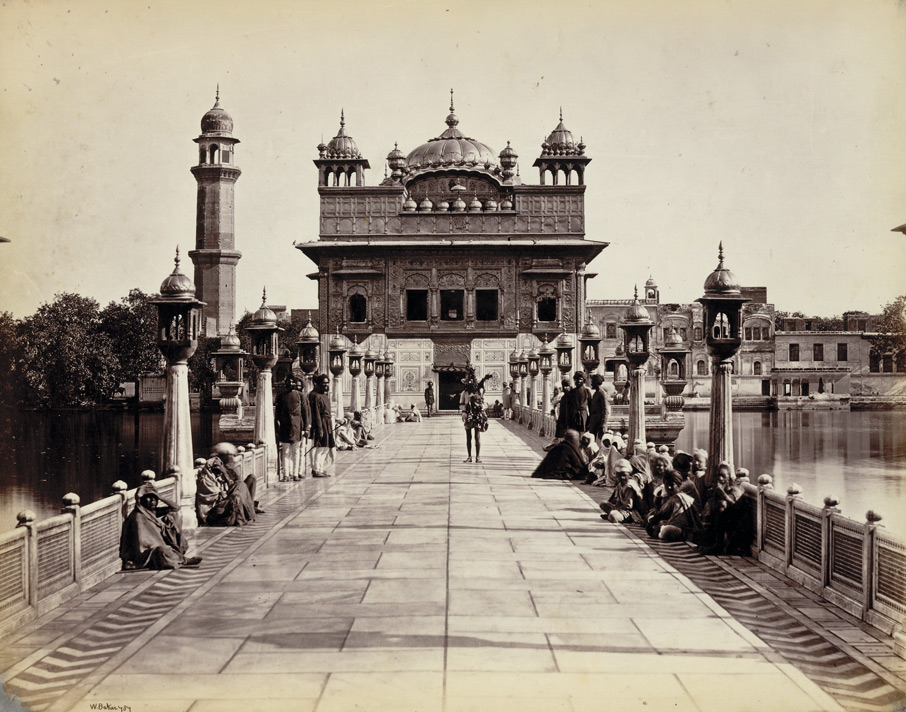
Under British colonial rule, the Singh Sabha movement (from 1873) rebuilt Sikh identity, education and institutions. The period spans the Jallianwala Bagh massacre of 1919 and the Gurdwara Reform movement that placed the historic shrines under community control.
Renewal under colonial rule
Under British rule, Sikhs set about renewing their faith and institutions. The Singh Sabha movement, begun at Amritsar in 1873, promoted education, standardised religious practice, and reasserted a distinct Sikh identity — founding schools and, in 1892, Khalsa College at Amritsar.1,2
Jallianwala Bagh
Colonial rule also brought tragedy. On Vaisakhi 1919, British troops fired on an unarmed crowd penned inside the walled garden of Jallianwala Bagh in Amritsar, killing hundreds — a turning point for the wider Indian independence movement.1,2
The Gurdwara Reform movement
Sikhs also moved to free the historic shrines from hereditary custodians. They formed the Shiromani Gurdwara Parbandhak Committee (SGPC) in 1920 to manage the gurdwaras; through a campaign of peaceful morchas — and despite bloodshed such as the Nankana Sahib massacre of 20 February 1921 — the struggle culminated in the Sikh Gurdwaras Act of 1925, which placed the shrines under elected community control.1,2
In this chapter
- British Annexation of the Punjab1849
- Founding of the Singh Sabha1873
- The Khalsa Jatha Founded in London1908
- The Gur Sikh Temple Opens at Abbotsford1911
- The First Gurdwara in the United States1912
- The Komagata Maru1914
- Jallianwala Bagh Massacre1919
- The Founding of the SGPC and the Akali Movement1920
- The Nankana Sahib Massacre1921
- The Gurdwara at Makindu1926
Last updated: